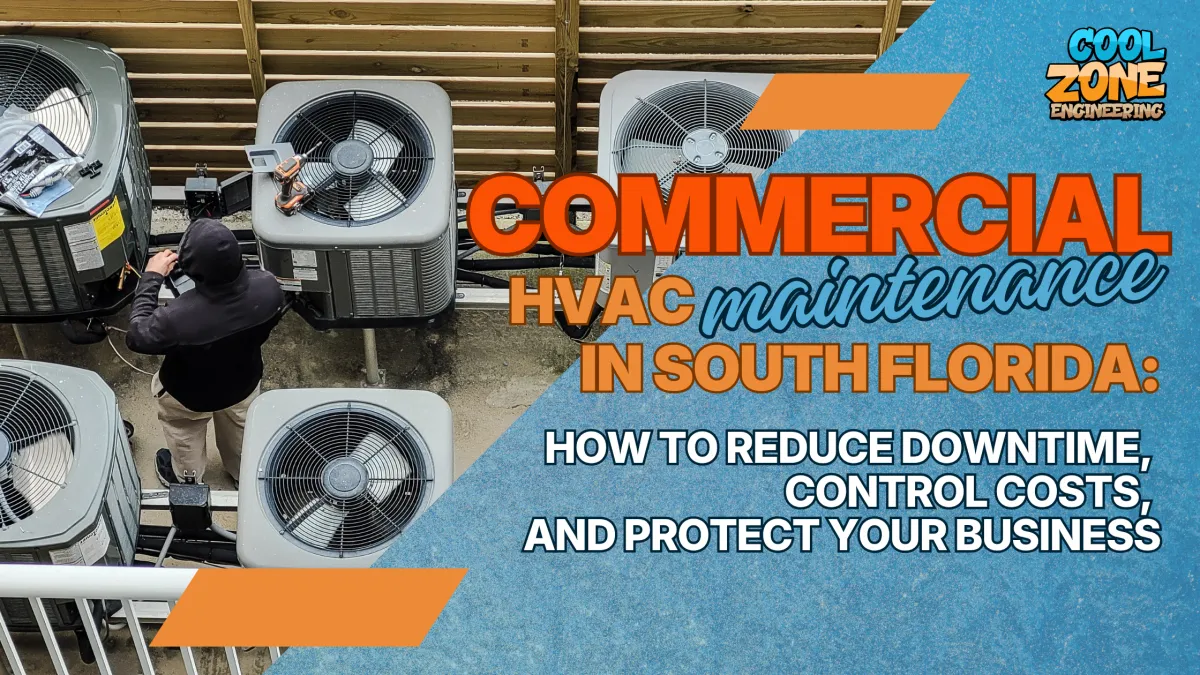
Commercial HVAC Maintenance in South Florida: How to Reduce Downtime, Control Costs, and Protect Your Business
When a commercial HVAC system starts failing, the problem rarely stays small.
It affects employees.
It affects customers.
It affects tenants.
It affects productivity.
And in many cases, it affects revenue.
For businesses in South Florida, HVAC is not just about keeping a building cool. It is about keeping operations stable, indoor conditions consistent, and avoidable service disruptions from turning into bigger business problems.
That is why commercial HVAC maintenance should be treated as an operational strategy, not just a maintenance task.
If your current approach is to wait until something breaks, you may be paying more than necessary through emergency calls, higher energy costs, avoidable downtime, and premature equipment wear.
Why HVAC problems cost businesses more than they think
In a commercial environment, HVAC issues create ripple effects.
A hot office can hurt employee focus.
A poorly cooled retail store can affect customer experience.
A building with uneven temperatures can trigger tenant complaints.
A ventilation issue can impact how the entire space feels and functions.
The true cost of HVAC failure is not limited to the repair bill. It often includes:
business disruption
emergency repair expenses
staff frustration
customer discomfort
tenant dissatisfaction
increased wear on equipment
reduced system lifespan
That is what makes preventative maintenance so valuable. It helps reduce both the visible and hidden costs of HVAC problems before they become urgent.
Reactive service vs. preventative maintenance
Reactive service means waiting until something goes wrong and then calling for repair.
That may seem practical, but it often means you are always responding late. By the time the problem becomes obvious, the system may already have been operating inefficiently for weeks or months.
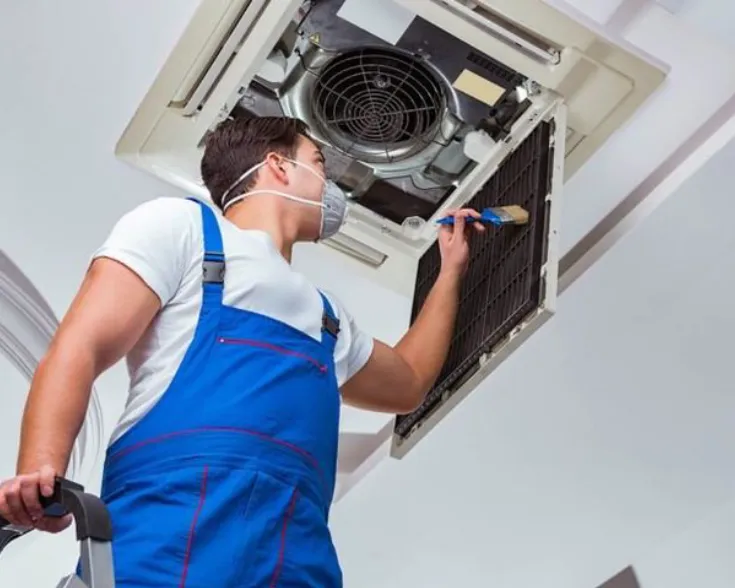
Preventative maintenance is different. It is about checking, servicing, and evaluating the system regularly so smaller issues can be caught before they turn into expensive failures.
That can help your business:
reduce emergency service calls
improve equipment efficiency
maintain more consistent comfort
extend system life
plan ahead for needed repairs
lower the risk of unexpected downtime
For a business owner or property manager, that kind of predictability is valuable. Emergencies create pressure. Maintenance creates control.
What regular maintenance helps prevent
Commercial HVAC maintenance is about more than changing filters. A strong maintenance program supports the overall performance of the system and helps identify risk early.
Without regular service, commercial systems become more vulnerable to several problems.
Unexpected breakdowns
Small issues can become major failures when they go unnoticed. A worn part that could have been replaced during routine service may eventually cause a full interruption.
Energy waste
A commercial HVAC system that is dirty, imbalanced, or struggling to perform will use more energy than necessary. That inefficiency can quietly increase operating costs month after month.
Comfort complaints
Weak airflow, inconsistent cooling, and humidity issues can quickly create complaints from staff, tenants, or customers. In commercial spaces, comfort problems are also operational problems.
Premature equipment wear
When systems operate under constant strain, they wear out faster. Maintenance helps protect equipment lifespan and reduce unnecessary stress on key components.
Emergency service situations
Not every emergency can be prevented, but many start as smaller issues. Regular maintenance reduces how often your team has to deal with urgent HVAC failures.
Why this matters even more in South Florida
South Florida’s climate puts heavy demand on HVAC systems. Cooling is needed often, humidity control matters, and commercial equipment can spend long periods working under load.
That means small performance issues can become expensive more quickly than they would in a less demanding market.
For example:
a struggling unit may run far longer than it should
poor humidity control can impact comfort and air quality
delayed repairs can escalate during peak cooling demand
inefficient performance can drive up operating costs fast
For commercial buildings in South Florida, HVAC reliability is not something to leave to chance.
Signs your building may need maintenance now
Not every HVAC issue starts with a shutdown. Many start with smaller signals that are easy to ignore until the problem becomes urgent.
Common warning signs include:
Rising utility bills
If energy costs keep climbing without a clear reason, your system may be losing efficiency.
Uneven temperatures
If some spaces feel comfortable while others feel warm or humid, there may be airflow or system performance issues.
Frequent repair calls
If you keep calling for repairs, your building may need a more proactive maintenance strategy.
Poor indoor conditions
If the air feels stale, damp, dusty, or inconsistent, HVAC maintenance gaps may be contributing to the problem.
Long system runtime
If the system struggles to keep up or seems to run constantly, performance may be declining.
Occupant complaints
Sometimes the first clear sign is not technical. It is operational. Employees, customers, or tenants start noticing discomfort before management sees the full issue.
These warning signs are worth acting on early. The longer they are ignored, the more likely they are to become expensive problems.
How maintenance supports business continuity
A commercial HVAC system is part of how your building functions every day. If it becomes unreliable, the building becomes harder to manage and less effective as a place to work, serve, or operate.
That is why HVAC maintenance should be viewed through the lens of business continuity.
Preventative service helps:
reduce disruptions
improve comfort consistency
avoid peak-season failures
support employee and customer experience
keep building operations more predictable
protect your property’s reputation
For many companies, that is just as important as the direct repair savings.
The financial case for preventative maintenance
Some businesses delay maintenance because they see it as an added expense. The better question is not whether maintenance costs money. The better question is what neglect costs.
Neglect often leads to:
higher energy bills
more repair visits
more emergency calls
shorter equipment life
avoidable downtime
larger replacement costs sooner than expected
Preventative maintenance helps reduce those risks. It does not guarantee a system will never need repairs, but it makes it far more likely that issues will be caught early and managed more efficiently.
That gives business owners and facility teams better control over costs and fewer unpleasant surprises.
Commercial HVAC service should not be one-size-fits-all
Every commercial property has different HVAC demands. A small office does not operate like a retail store. A multi-tenant property does not have the same requirements as a warehouse or specialty space.
A useful maintenance strategy should consider factors such as:
building size
equipment type
occupancy patterns
operating hours
indoor air quality priorities
system age
sensitivity to downtime
The goal is not to simply “have maintenance.” The goal is to keep the HVAC system aligned with how the building is actually used.
That is where working with the right HVAC partner matters.
Why emergency repair should be the backup plan
Emergency HVAC service is important. When a commercial system goes down unexpectedly, fast support matters.
But emergency repair should not be your main operating strategy.
If most HVAC decisions happen only after the building is already uncomfortable or a major failure has already occurred, you are almost always making decisions under pressure. That usually means fewer options, more disruption, and higher urgency.
A better model looks like this:
use maintenance to reduce risk
use inspections to catch issues early
use planned repairs to avoid bigger failures
use emergency service when something truly unexpected happens
That is how businesses create a more reliable and resilient HVAC approach.
Indoor air quality matters too
Temperature is only one part of commercial comfort. Indoor air quality also plays a major role in how people experience a building.
If your building feels stuffy, dusty, damp, or stale, the HVAC system may be contributing to the issue. Maintenance helps support better airflow, cleaner indoor conditions, and more stable humidity control.
That matters for offices, retail environments, professional spaces, and virtually any property where people spend time indoors.
A better-performing HVAC system does not just cool the building. It helps create an environment that feels more comfortable, more professional, and easier to operate.
Why businesses choose Cool Zone Engineering
For business owners and property managers in South Florida, it helps to work with an HVAC company that understands both service urgency and long-term system performance.
Cool Zone Engineering offers commercial HVAC services including installation, repair, maintenance, indoor air quality solutions, and emergency support. That makes them a practical partner for businesses that need both proactive maintenance and responsive service when issues arise.
The right HVAC company should do more than just respond to problems. It should help reduce them.
Final thoughts
Commercial HVAC maintenance is not just about equipment. It is about protecting operations.
When your system is reliable, your building runs better. Comfort stays more consistent. Complaints are reduced. Energy waste is easier to control. And your team spends less time reacting to preventable problems.
For businesses in South Florida, that is a major advantage.
If your current HVAC strategy is mostly reactive, now is the right time to improve it. A more proactive maintenance plan can help reduce downtime, control costs, and give your business a more dependable indoor environment.
Book a consultation with Cool Zone Engineering to evaluate your commercial HVAC system and build a maintenance strategy that supports your business.